

Social media is one of the most affordable ways for a small business to stay visible, build trust and bring in customers. It is also one of the easiest places to waste time. Posting randomly, chasing every new platform and measuring likes instead of leads leaves many owners feeling that “social media doesn’t work for us”.
This playbook gives you a simple, repeatable approach: choose the right platforms, plan content that builds trust, post consistently, and measure what actually matters.
Step 1: Set One Clear Goal
Before choosing platforms or writing posts, decide what social media should do for your business. Pick one primary goal for the next 90 days:
- Leads or enquiries (calls, form fills, DMs)
- Website traffic to service pages or your online store
- Foot traffic to a physical location
- Brand awareness in your local area or niche
A single goal keeps your content focused and makes it obvious which numbers to track.
Step 2: Choose Platforms Where Your Customers Actually Are
You do not need to be everywhere. Two well-run platforms beat five neglected ones.
- Facebook: strong for local businesses, community groups, events and reaching a broad adult audience.
- Instagram: ideal for visual businesses such as food, fashion, beauty, fitness, interiors and creative services.
- LinkedIn: the best fit for B2B services, consultants and professional firms.
- TikTok: powerful for reaching younger audiences with short, authentic video.
- Google Business Profile: not a social network, but posts, photos and reviews here directly influence local search. Pair it with our local SEO checklist.
Start with the one or two platforms that match your customers, and only expand once you can post consistently.
Step 3: Build Your Content Around Four Pillars
Content pillars are the recurring themes you post about. They stop you from staring at a blank screen and make sure your feed builds trust rather than only selling.
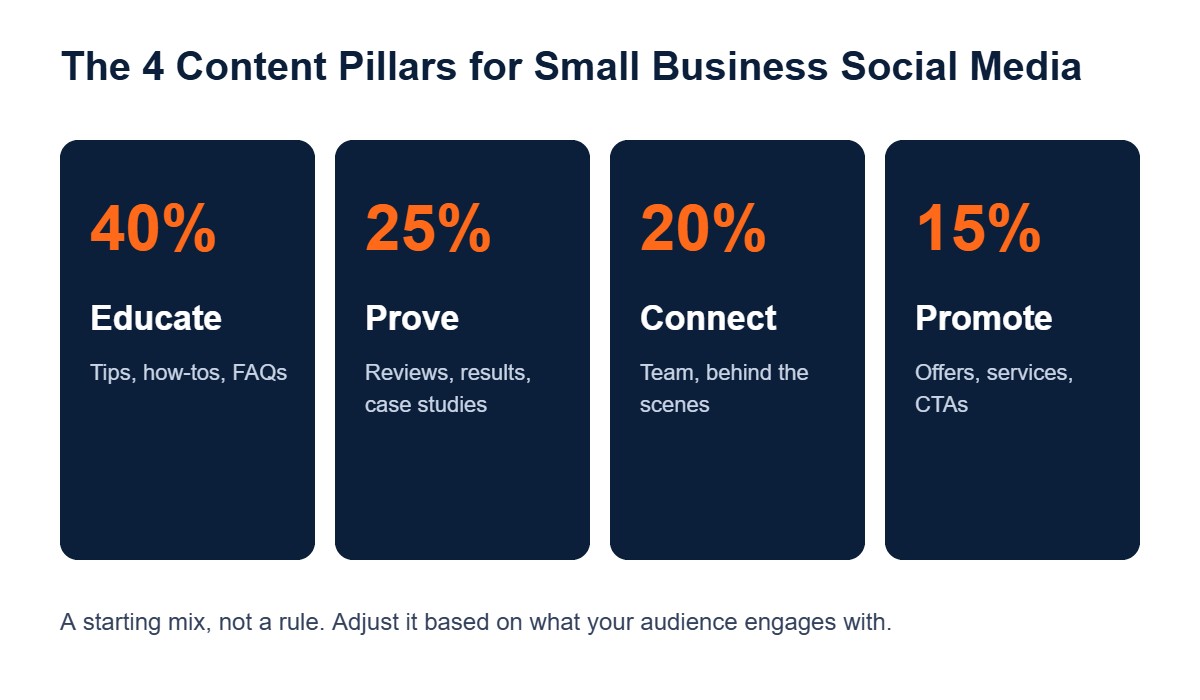
- Educate: answer common customer questions, share quick tips and explain how your service works.
- Prove: share reviews, before-and-after examples, results and case studies.
- Connect: show your team, your process and the people behind the business.
- Promote: highlight services, offers and clear calls to action.
Most of your posts should help or reassure people. When you do promote, your audience is far more likely to respond.
Step 4: Create a Simple, Sustainable Posting Routine
Consistency matters more than volume. A realistic routine for most small businesses looks like this:
- 3 to 5 posts per week on your main platform.
- Short-form video (Reels, TikTok, Shorts) at least once or twice a week, since video typically earns more reach.
- Batch creation: plan and film a week or a month of content in one session, then schedule it.
- Reuse content: turn one blog post or customer question into a carousel, a short video and a story.
Scheduling tools such as Meta Business Suite let you plan posts in advance so social media does not take over your day.
Step 5: Engage, Don’t Just Broadcast
Social platforms reward conversation. Reply to comments and messages quickly, thank people who tag you, and join local or industry conversations. How you respond to feedback, especially negative feedback, also shapes your reputation. Our guide to online reputation management covers how to handle reviews and comments professionally.
Step 6: Add a Small Paid Budget
Organic reach on most platforms is limited, so even a modest ad budget can multiply results. Good starting points are:
- Boosting your best-performing organic posts to a local or lookalike audience.
- Retargeting website visitors with a testimonial or offer.
- Lead ads that let people enquire without leaving the app.
If you are deciding how to split budget between social and search, read our comparison of Google Ads vs Meta Ads.
Step 7: Measure What Matters
Likes and followers are nice, but they do not pay the bills. Track metrics tied to your goal:
- Leads and enquiries from social (use UTM links and form tracking).
- Website clicks and what visitors do after they arrive.
- Engagement rate on each content pillar, to see what your audience values.
- Cost per lead for any paid campaigns.
Review your numbers monthly, keep doing what works, and drop what doesn’t. Make sure the pages you send people to load quickly and clearly explain your offer; a well-designed website turns more social visitors into customers.
Common Social Media Mistakes Small Businesses Make
- Trying to be active on every platform at once.
- Posting only promotions and sales messages.
- Going silent for weeks, then posting several times in one day.
- Ignoring comments and direct messages.
- Not linking social activity to any business goal or tracking.
Need Help With Social Media Marketing?
A consistent, strategic social presence takes time that many business owners simply don’t have. RankVyn’s social media marketing services cover strategy, content creation, community management and paid social, all tied back to leads and sales. We also combine social with PPC advertising for businesses that want faster growth.
Get in touch with our team for a free review of your social media presence.
Frequently Asked Questions
Which social media platform is best for a small business?
It depends on your customers. Facebook and Instagram suit most local and consumer businesses, LinkedIn suits B2B services, and TikTok suits brands targeting younger audiences.
How often should a small business post on social media?
Three to five quality posts per week on your main platform is a sustainable target for most small businesses. Consistency matters more than volume.
Is social media marketing worth it for small businesses?
Yes, when it is tied to a clear goal and measured properly. It builds trust, keeps you visible and supports other channels such as search and email.
Should I do social media myself or hire an agency?
Many owners start themselves, then bring in an agency when time becomes the bottleneck or when they want to add paid advertising and professional content.
